Mastering the Long Distances
Insights from the 13 Valleys Ultra Webinar
Preparing for a long-distance mountain ultra-marathon can be as intimidating as it is exciting. To help runners gearing up for the challenging 7 Valleys (110k) and 13 Valleys (100-miler) distances, 13 Valleys Ultra hosted a live Q&A webinar.
Hosted by Alice Peyredieu, the session featured invaluable insights from two seasoned ultra-runners:
- Leonie Ansems De Vries: Two-time winner of the 7 Valleys who is stepping up to the 13 Valleys this year.
- Rachel Williams: Full-time working mom who successfully conquered the gruelling 13 Valleys last year.
Whether you missed the live session or just want to review the expert advice, here are the core takeaways on training, course conditions, sleep deprivation, and race-day strategy.
Training and Time Management
Balancing ultra-marathon training with a full-time job and family commitments is a massive puzzle. Both speakers emphasized that consistency and adaptability are key.
- Train by Time, Not Distance: Rachel focuses entirely on "time on feet" rather than chasing a specific mileage goal.
- The 10% Rule: To prevent injury, increase your weekly volume or long-run duration gradually—by no more than 10% each week.
- Back-to-Back Weekends: A staple for ultra training. Rachel suggests a long run on Saturday followed by a long, purposeful hike on Sunday. This teaches your body to move on tired legs without the heavy impact of continuous running.
- Incorporate the Family: Use hiking days as an opportunity to bring family or children along so they feel part of the journey.
Training in Flat Areas
Not everyone lives next to the mountains. If you live in a flat region, Leonie and Rachel recommend getting creative:
- Repetition is Key: Find any small local incline or reservoir steps and repeat them continuously.
- Cross-Training: Leonie utilizes cycling to build leg strength and aid recovery. She cycles 15 miles to the nearest hill, does hill reps, and cycles back.
- Strength Training: Do not neglect strength work. Squats, step-ups, and resistance band exercises (like "crab walks" with a band above the knees) keep muscles under tension and prepare quads for brutal descents.
"We’ve got to remember when we’re on an ultra… we ain't running up those hills. I'm power-marching. Getting your walks in is equally good training." – Rachel Williams
Course Demands & Crucial Sections
The Lake District terrain is spectacular but unforgiving.
The 7 Valleys
Leonie describes the 7 Valleys as highly runnable, punctuated by four massive climbs:
- The First Two Climbs: The second climb involves a tiny bit of technical scrambling.
- High Street: At 800 meters, this is the highest point. While grassy and non-technical, it is incredibly steep and feels brutal if you are fatigued or under-fueled.
- Sticks Pass: Coming around the 90km mark, this section features loose slate and can become slick and muddy, making the descent very taxing on your quads.
The 13 Valleys
- The First 35 Miles: Rachel noted that this opening stretch features constant, back-to-back climbs.
- The Value of a Recce: Because the 13 Valleys starts at 6:00 PM, you will tackle the first 30 miles in pitch darkness. Rachel strongly advises doing a daytime reconnaissance run of this specific section beforehand to build confidence with the terrain and footing.
Managing Night Running & Sleep Deprivation
Stepping into a multi-day format means dealing with the psychological toll of a second night without sleep.
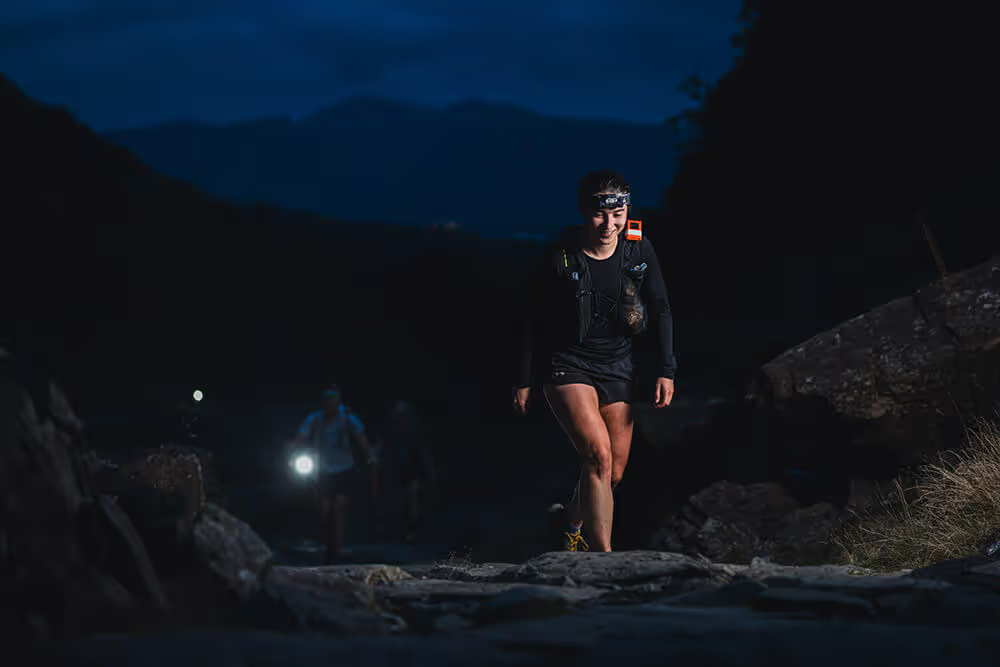
- Night Training: Leonie suggests organizing occasional late-night group runs (e.g., 9:00 PM to 2:00 AM) to get your body visually and mentally adjusted to headtorch running.
- Hallucinations: Sleep deprivation hits everyone differently. Rachel shared that she experienced vivid hallucinations during her second night on the 13 Valleys (mistaking grass tufts for animals or speedboats on a mountain).
- Listen to Your Body: If you begin staggering or feeling dangerously fatigued, do not hesitate to find a safe, sheltered spot to set an alarm and take a brief "trail nap."
Golden Rules for Race Day Success
"Be Bothered"
Adopted from the legendary Spine Race briefing, Rachel’s top mental rule is to always be bothered. If you think you might be getting cold, stop and put a layer on immediately. If you wait until you are already shivering, it is too late to recover that body heat easily.
Foot Care is Non-Negotiable
Wet feet are inevitable in the lakes. While your feet might survive a 50-miler in one pair of socks, a 100-miler is a different beast.
- Change your socks halfway through the race.
- Do not wait until skin maceration or blisters set in; proactive foot care will save your race.
Fueling Dictates Performance
When you hit a mental low or start contemplating quitting, it is almost always an energy deficit. Leonie recalled a moment on a tough climb where she wanted to give up, only to realize she simply needed to slow her pace down and eat more. Fueling properly keeps the "mind monsters" at bay.
Good luck to everyone tackling the 2, 5, 7, or 13 Valleys this year! Keep your legs strong, practice your fueling, and remember to "be bothered" out on the trails.